Foreign Workers in China and Israel New Trends Policies and Human Stories

Foreign workers often appear in policy debates as numbers, quotas, or labor shortages. On the ground, the picture is more personal: a Thai farmworker deciding whether to return to Israel after the October 7 attacks, an English teacher in Shanghai rebuilding a career after pandemic border controls, an Indian construction worker weighing higher pay against risk, or a Filipino caregiver navigating Hebrew paperwork for an elderly client.
China and Israel are very different economies, but both are rethinking how they use foreign labor. China remains selective, with a focus on skilled professionals and controlled work visas. Israel, under pressure from war-related labor gaps, has moved faster to recruit workers from abroad, especially for construction, agriculture, and care work.
This article reflects publicly available information through 2024 and is informational only, not legal advice.
The big trend is selective need, not open-door migration
Foreign labor in China and Israel is growing in importance, but for different reasons.
In China, the story is not mass immigration. The country has historically had a small foreign-born population compared with its size. China’s 2020 national census counted fewer than 1 million foreign nationals living in mainland China, a tiny share of a country of more than 1.4 billion people. Only part of that group is in formal employment.
The foreign worker population is concentrated in large cities and economic hubs such as Shanghai, Beijing, Shenzhen, Guangzhou, and parts of the Yangtze River Delta. Foreign professionals often work in education, technology, finance, manufacturing management, trade, logistics, research, and multinational companies.
The trend since the pandemic has been uneven. Border restrictions disrupted foreign employment and pushed many expatriates to leave. Since China reopened, business travel and hiring have recovered, but the foreign worker environment is more selective. Employers want people with hard-to-find skills, and the government continues to rank foreign workers by education, salary level, work experience, and strategic value.
In Israel, the trend is more urgent and more visible. Before the Israel-Hamas war, Israel relied heavily on Palestinian workers, especially in construction, agriculture, and some service jobs. It also employed large numbers of migrant workers from countries such as Thailand, the Philippines, India, Nepal, Sri Lanka, Moldova, and China.
After October 7, 2023, Israel sharply restricted Palestinian labor entry from the West Bank and Gaza. That created immediate shortages in construction and farming. The government responded by expanding recruitment from abroad, with special attention to Indian construction workers, agricultural workers from Asia, and caregivers from established migrant labor channels.
That shift changed the public conversation. Foreign labor in Israel is no longer just a long-running labor policy issue. It is now tied to national security, housing supply, food production, elder care, and diplomatic agreements.
China and Israel use foreign labor in different parts of the economy
The phrase Foreign Workers in China and Israel New Trends Policies and Human Stories covers two very different labor models. China tends to pull in skilled or specialized foreign workers. Israel depends more heavily on foreign labor for physical, caregiving, and shortage-hit sectors.
Country | Key sectors using foreign labor | Main economic role |
China | Education, advanced manufacturing, trade, technology, finance, hospitality, research | Filling skill gaps, supporting international business, bringing language and technical expertise |
Israel | Construction, agriculture, caregiving, hospitality, manufacturing | Keeping essential services running, reducing project delays, supporting farms and elderly care |
Both | Universities, logistics, specialized services | Connecting local industries to global talent and foreign markets |
China looks for skills, language, and global connections
In China, foreign workers often support economic goals that depend on international exchange. A German engineer may help a manufacturing supplier meet European standards. A South Korean manager may coordinate supply chains across East Asia. An American teacher may work at an international school. A Kenyan trader in Guangzhou may connect Chinese exporters with African markets.
Local economies benefit when foreign workers bring networks, language skills, and experience that are hard to find locally. International schools help attract executives and researchers. Foreign academics support universities. Trade communities help Chinese businesses reach customers abroad.
Still, the overall scale remains limited. China does not rely on migrant labor in the same way that Gulf states or smaller high-income economies do. The state’s priority is control, skills, and alignment with development goals.
Israel depends on foreign labor to keep daily life moving
Israel’s economy uses foreign labor in more hands-on sectors.
Construction is the clearest example. When Palestinian workers could no longer enter at previous levels after October 2023, housing and infrastructure projects faced delays. Developers and contractors pressed the government to speed up recruitment from India, China, Moldova, and other countries.
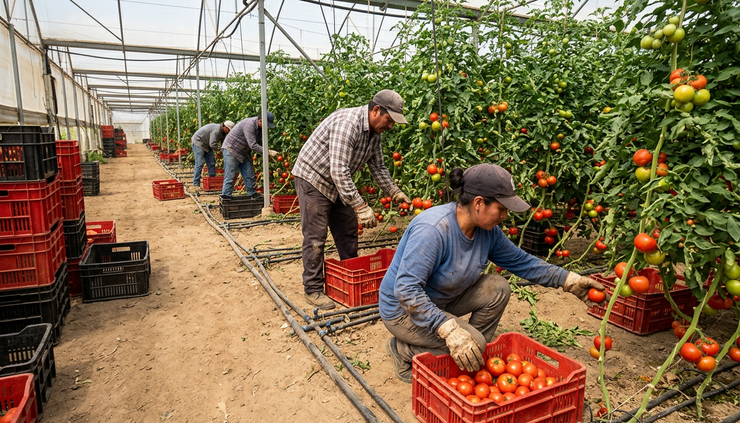
Agriculture faced a similar shock. Thai workers had long played a major role on Israeli farms. After the October 7 attacks, many left or hesitated to return, while farms near conflict zones struggled to harvest crops. Israel then looked to recruit more workers from other Asian countries and to bring back experienced workers where possible.
Caregiving is another pillar. Many elderly and disabled Israelis rely on live-in foreign caregivers, especially from the Philippines, Nepal, India, and Sri Lanka. Without them, families often face impossible choices between work, care, and health needs.
Foreign labor helps Israel fill jobs that local workers often avoid because of pay, location, hours, or physical demands. At the same time, dependence on migrant labor raises hard questions about wages, worker protections, and whether certain industries have become built around cheaper imported labor.
Recent policy changes are reshaping who can work and how
Both countries have adjusted policy, but the pace and purpose differ.
China is making entry easier for some, while keeping work tightly regulated
China has taken steps to reopen and reconnect after pandemic-era isolation. It expanded visa-free entry for citizens of some countries and made business travel easier in limited cases. It also introduced a new version of its Foreign Permanent Resident ID Card, often called the “five-star card,” in late 2023. The card was designed to make it easier for approved foreign permanent residents to handle services such as travel, banking, and online transactions.
These changes help some foreign residents and business visitors, but they do not mean anyone can work freely in China. Formal employment still requires the correct work authorization, usually built around a work permit and residence permit. Foreign workers are commonly evaluated under a points-based classification system that favors highly skilled talent, experienced professionals, and people working in fields China wants to develop.
That creates a clear policy message: China wants foreign talent, but on controlled terms.
Workers who do not fit approved categories can face major risks. Teaching on the wrong visa, taking side jobs without permission, or working for a different employer than the one listed in the permit can trigger fines, deportation, or bans on reentry.
Israel is expanding recruitment after a wartime labor shock
Israel’s recent policy changes are more directly tied to labor shortage. After October 2023, the government moved to reduce reliance on Palestinian workers and recruit more foreign workers through state-to-state and regulated channels.
India became a major focus. Israeli construction companies and government agencies sought to bring in thousands of Indian workers to fill gaps at building sites. Sri Lanka, Thailand, Nepal, and other countries also remained important sources for agriculture and caregiving.
Israel has also used bilateral agreements to reduce illegal recruitment fees and improve oversight. These agreements matter because recruitment debt is one of the biggest risks migrant workers face. When workers borrow heavily to pay brokers, they may tolerate unsafe conditions because quitting feels financially impossible.
The policy challenge is speed versus protection. Israel needs workers quickly, but fast recruitment can increase abuse if screening, contracts, housing, insurance, and safety rules fall behind.

The hardest issues are legal status, language, debt, and belonging
Foreign workers in both countries often face the same basic problem: their right to stay is tied to work. Losing a job can mean losing immigration status, housing, income, and a path to recover unpaid wages.
Legal issues can trap workers in bad situations
In China, the legal risk often centers on visa compliance. A worker may arrive with a promise of a teaching job, then discover the employer is not licensed to sponsor the correct permit. Another may accept freelance work without realizing that side employment is not allowed. Even skilled professionals can run into problems if a company changes its legal structure or fails to renew documents on time.
In Israel, foreign workers may be limited by sector and employer rules. A caregiver, for example, may have legal permission to work in care but not in farming or hospitality. A construction worker recruited for one project may not be free to shift jobs without official approval.
Recruitment fees are another serious issue. Even when destination countries limit fees, workers may pay brokers in their home countries. Debt can follow them across borders.
Cultural integration is practical, not just emotional
Language shapes daily life. In China, Mandarin is often essential for renting apartments, using local apps, visiting hospitals, and dealing with police registration. English helps in some international workplaces, but outside major cities it may not be enough.
In Israel, Hebrew is the main language of public life, while many migrant workers also navigate English, Arabic, Russian, Thai, Hindi, Tagalog, Nepali, or Sinhala-speaking communities. A caregiver may learn medical terms before casual conversation. A farmworker may learn safety instructions first.
Cultural integration also includes food, religion, holidays, housing norms, and expectations around authority. Foreign workers may feel welcome in one setting and invisible in another. Many build support through churches, temples, WhatsApp groups, ethnic grocery stores, language exchanges, and worker rights organizations.
Safety has become a larger concern in Israel
For foreign workers in Israel, the war added a layer of risk. Agricultural workers near border areas faced direct danger. Caregivers had to decide whether to stay with elderly clients during attacks or seek safety themselves. Some workers returned home after October 2023, while others stayed because of debt, family obligations, or loyalty to employers and patients.
That reality changed how workers assess opportunity. Pay still matters, but so do shelters, insurance, evacuation plans, and contact with embassies.
Human stories show what the numbers miss
The following accounts are composite stories based on commonly reported experiences among foreign workers. They are not presented as direct interviews with named individuals.
A teacher in Shanghai rebuilds after the pandemic
“Daniel,” a foreign language teacher in Shanghai, left China during the pandemic and returned after restrictions eased. The job market he came back to felt different. International schools still hired, but language centers had shrunk after education policy changes and tighter regulation.
His new employer handled the paperwork carefully. That made all the difference. He had a valid work permit, a residence permit tied to the same employer, and a written contract in English and Chinese.
His challenge was less about the classroom and more about daily life. Many services required Chinese apps, local bank access, and real-name verification. Friends who had stayed through the pandemic had deeper local ties. He had to rebuild from scratch.
A Thai farmworker weighs safety against income
“Niran,” a Thai agricultural worker, had worked in Israel before and knew the rhythm of farm life: early mornings, long days, shared housing, and wages that could support relatives at home. After October 2023, his family begged him not to return.
He faced a painful choice. Staying home meant safety but fewer earnings. Returning meant risk but the chance to repay debt and fund a sibling’s education.
For workers like him, policy debates about quotas are deeply personal. A safe workplace is not just a rule on paper. It means shelters nearby, clear alerts in a language workers understand, and employers who treat foreign staff as people with families, not just labor supply.
A caregiver in Tel Aviv becomes part of a family, but not fully
“Maria,” a live-in caregiver from the Philippines, helps an elderly Israeli woman bathe, eat, take medicine, and attend appointments. The family depends on her. She knows the patient’s moods, memories, and fears.
Yet her own life is narrow. Her room is small. Her day off is precious. Her visa depends on care work, and changing employers can be stressful. She sends money home each month and misses birthdays, graduations, and funerals.
Care work creates intimacy, but not always equality. Many caregivers become emotionally close to families while still lacking long-term security in the country where they spend years of their lives.
An Indian construction worker sees opportunity and uncertainty
“Ravi,” an Indian construction worker recruited for Israel, sees the job as a chance to earn more than he could at home. He expects hard work and long hours. What worries him are the unknowns: contract terms, deductions, housing quality, safety training, and whether the job will last.
His experience will depend on the quality of recruitment and enforcement. If the system works, he can earn, save, and return home with new skills. If it fails, he could face debt, unsafe conditions, or confusion about his rights.
What to watch next
Several trends will shape the next phase of foreign work in both countries.
In China, watch whether economic slowdown, demographic aging, and global business ties push the government to make skilled immigration easier. China may continue to improve services for high-value foreign residents while keeping strict controls on lower-wage migration.
In Israel, watch recruitment from India and other Asian countries, the future of Palestinian labor access, and whether worker protections keep pace with emergency hiring. Construction and agriculture will remain pressure points. Caregiving will grow as the population ages.
For both countries, the central question is not only how many foreign workers enter. The better question is whether workers can live safely, understand their rights, earn promised wages, and participate in everyday life with dignity.
Foreign workers fill labor gaps, but they also reveal deeper truths about an economy. They show which jobs locals avoid, which industries depend on mobility, and how governments balance control with need. Behind every permit is a person making a calculation about risk, family, money, and belonging. The countries that recognize that human reality will build stronger labor systems than those that treat migration as a number alone.
Comments